
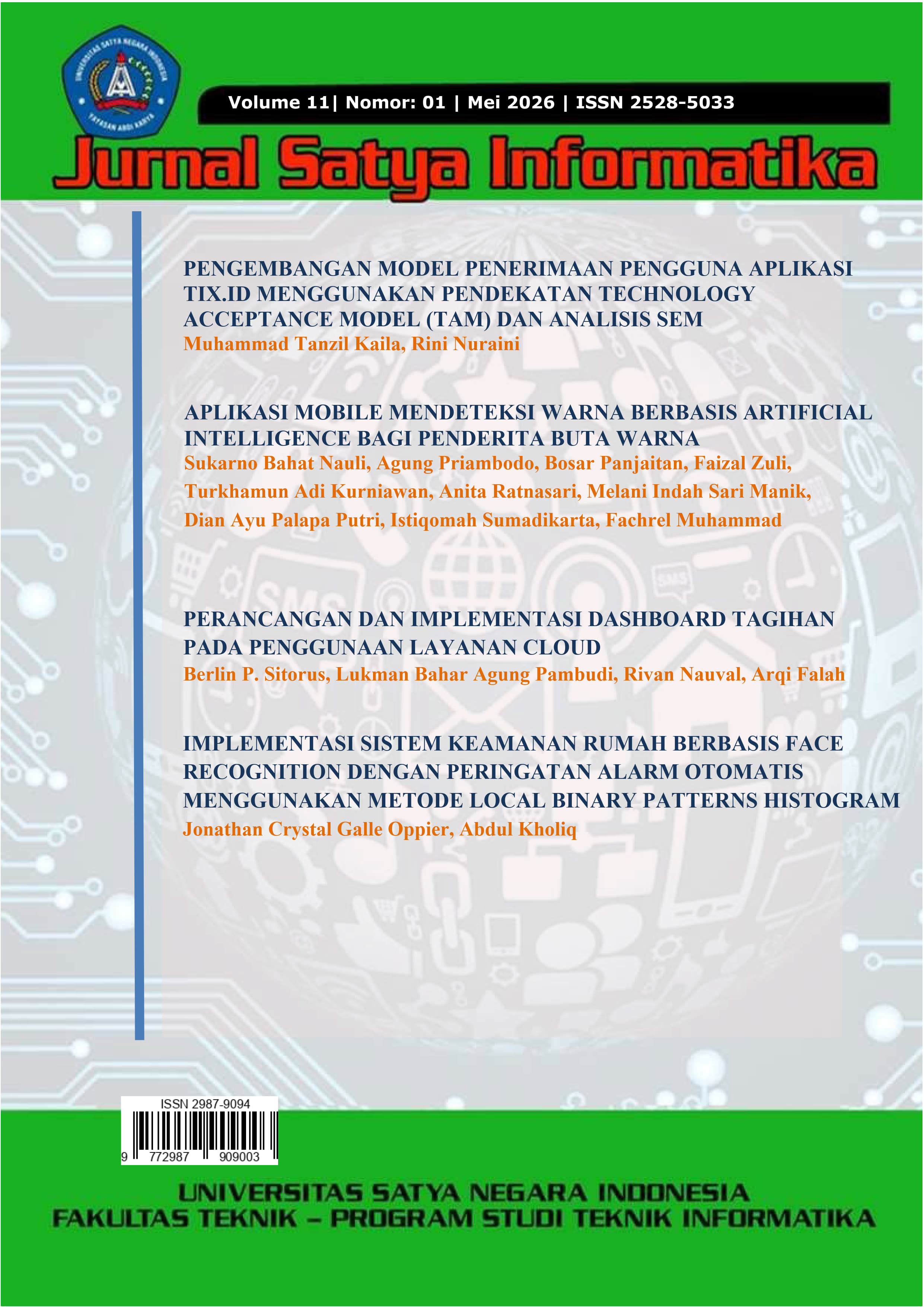
PENGEMBANGAN MODEL PENERIMAAN PENGGUNA APLIKASI TIX.ID MENGGUNAKAN PENDEKATAN TECHNOLOGY ACCEPTANCE MODEL (TAM) DAN ANALISIS SEM
DOI:
https://doi.org/10.59134/jsk.v11i1.766Keywords:
Tix.id, Technology Acceptance Model, Structural Equation Modeling, User AcceptanceAbstract
The development of information technology has transformed people's behavior in accessing online entertainment services. One of the widely used innovations is Tix.id, a cinema ticket booking application developed by PT Nusantara Elang Sejahtera, part of the Emtek Group, in 2018 in collaboration with Bioskop XXI. This study aims to analyze the level of user acceptance of Tix.id using the Technology Acceptance Model (TAM), which includes the variables Perceived Ease of Use (PEOU), Perceived Usefulness (PU), and Attitude Toward Using (ATU). The analysis was conducted using the Structural Equation Modeling (SEM) approach with AMOS software based on questionnaire data from active users in Jakarta. The results indicate that all relationships among variables are positive and significant, with Chi-square = 38.06; df = 41; p = 0.60213; RMSEA = 0.000, indicating that the model demonstrates a good fit. These findings suggest that perceived ease of use and perceived usefulness have a strong influence on users’ attitudes toward using the Tix.id application.
References
Chuttur, M. (2009). Overview of the Technology Acceptance Model: Origins, developments and future directions. Sprouts: Working Papers on Information Systems, 9(37), 1–23.
Davis, F. D. (1989). Perceived usefulness, perceived ease of use, and user acceptance of information technology. MIS Quarterly, 13(3), 319–340.
Davis, F. D., Bagozzi, R. P., & Warshaw, P. R. (1989). User acceptance of computer technology: A comparison of two theoretical models. Management Science, 35(8), 982–1003.
Gefen, D., Karahanna, E., & Straub, D. W. (2003). Trust and TAM in online shopping: An integrated model. MIS Quarterly, 27(1), 51–90.
Ghozali, I. (2018). Structural Equation Modeling: Konsep dan Aplikasi dengan Program AMOS 24. Semarang: Badan Penerbit Universitas Diponegoro.
Hair, J. F., Black, W. C., Babin, B. J., & Anderson, R. E. (2014). Multivariate data analysis (7th ed.). Pearson Education Limited.
Jogiyanto, H. M. (2007). Sistem informasi keperilakuan. Yogyakarta: Andi Offset.
Jogiyanto, H. M. (2017). Model kesuksesan sistem teknologi informasi. Yogyakarta: Andi Offset.
Legris, P., Ingham, J., & Collerette, P. (2003). Why do people use information technology? A critical review of the Technology Acceptance Model. Information & Management, 40(3), 191–204.
Nuraini, R. (2017). Faktor-faktor perilaku yang mempengaruhi penerimaan sistem e-learning Esfindo (E-School for Indonesia). Prosiding SNITek, Jakarta.
Park, N., Rhoads, M., Hou, J., & Lee, K. M. (2014). Understanding the acceptance of teleconferencing systems among employees. Computers in Human Behavior, 39, 118– 127.
Santoso, S. (2014). Konsep dan aplikasi SEM dengan AMOS. Jakarta: Elex Media Komputindo.
Venkatesh, V., & Davis, F. D. (2000). A theoretical extension of the Technology Acceptance Model: Four longitudinal field studies. Management Science, 46(2), 186–204.
Venkatesh, V., Morris, M. G., Davis, F. D., & Davis, G. B. (2003). User acceptance of information technology: Toward a unified view. MIS Quarterly, 27(3), 425–478.
Venkatesh, V., Thong, J. Y. L., & Xu, X. (2012). Consumer acceptance and use of information technology: Extending the Unified Theory of Acceptance and Use of Technology. MIS Quarterly, 36(1), 157–178.
Downloads
Published
How to Cite
Issue
Section
License
Copyright (c) 2026 Muhammad Tanzil Kaila, Rini Nuraini

This work is licensed under a Creative Commons Attribution-NonCommercial-ShareAlike 4.0 International License.